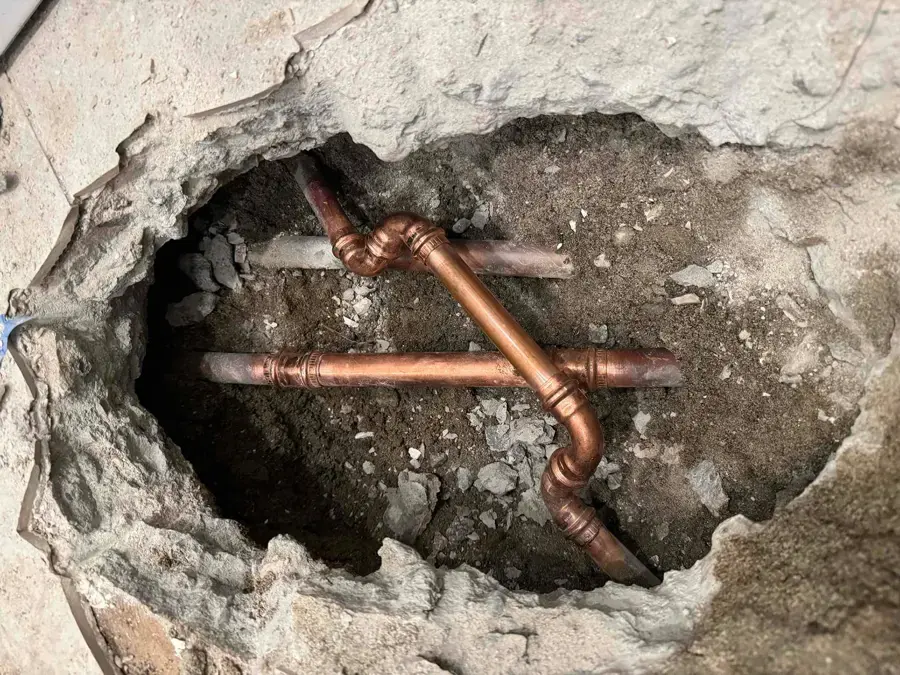
In early September 2018, an eight inch water pipe broke overnight along Old Highway 66 in Catoosa, and a mobile home park across the street lost water. It was the third major city break in about three weeks. The breaks were in city pipes, but the explanation raises a fair question for homeowners: what does moving ground do to the plumbing around a house?
Key takeaways
- KTUL tied three major city water pipe breaks in about three weeks in 2018 to soil that dried out in early summer and swelled when heavy rain soaked it.
- Those were city pipes, not home plumbing, but moving soil can also strain the pipes around a house.
- The soil survey maps mostly moderate shrink swell clay in the city, with Apperson soils at the high edge of that class.
- A water meter that keeps turning with every fixture off, a warm floor spot or damp baseboards can point to a leak in a home's own pipes.
- A plumber finds and repairs the leak, and the restoration team extracts the water and dries the floor and the bottoms of the walls.
The September 2018 breaks along Old Highway 66
KTUL reported the break on September 6, 2018, describing an eight inch water pipe that broke overnight along Old Highway 66 and a mobile home park across the street that lost water.
City crews were on their third major break in about three weeks. KTUL tied the breaks to soil that dried out in early summer and then swelled when heavy rain saturated it.
Those breaks were in city pipes, not in the plumbing inside homes. The city buys its drinking water from the City of Tulsa through a consecutive connection, and the Utility Department maintains the water and sewer services.
How moving soil strains buried pipes
Clay rich soil swells as it takes on water and shrinks as it dries. A pipe buried in that soil is pushed and pulled as the ground moves, and the weakest joint or fitting gives first.
The swing between dry and wet is the hard part. A pipe in steady soil is under much less strain than one in ground that keeps changing.
The Natural Resources Conservation Service soil survey maps several soils in the city. Its clay rich soils fall mostly in the moderate shrink swell class, with Apperson soils at the high edge of that class.
- Dry spells: soil shrinks and can pull away from a pipe, leaving it less supported.
- Heavy rain: soil swells, pushes on pipes and fittings and adds weight.
- Repeated cycles: the same joint flexes again and again until it fails.
City pipes and home pipes are different problems
A break in the city's pipes
Water running in the street, a neighbor with no water or lower pressure across several homes points to the city's pipes. City crews make those repairs.
A leak in a home's own plumbing
A leak that shows up only inside one house, such as a wet floor or a meter that turns with nothing running, points to that home's plumbing. A plumber can confirm where the leak is.
How to tell which one it is
- Check the street: water running or a wet patch near the curb points outside.
- Ask the neighbors: are they also low on pressure or out of water?
- Check the meter: turn off every fixture and watch the dial.
- Call a plumber: confirm where the leak is before anything is cut.
Signs of a hidden leak under the floor
In a home built on a slab, supply pipes can run under the floor, and a slab leak can go unseen for a long time. A leak in a hot water pipe often shows as a warm spot, while one in a cold pipe may show only as dampness.
Water that runs under a slab can also surface at a door threshold or along the bottom of a wall.
- Meter: the dial keeps turning when every fixture is off.
- Heat: a warm or damp spot on a floor over a hot water pipe.
- Sound: running water heard in a quiet house.
- Moisture: damp baseboards, lifting flooring or a musty smell at the bottom of a wall.
- Pressure: a drop in water pressure at the taps.
First steps and who does what
Shutting off the water at the main valve stops new water from coming in. The drying job begins once the leak is stopped or controlled.
Stopping the water does not dry the floor. Moisture left in the slab, the flooring and the bottoms of the walls keeps spreading.
- Shut off the water at the home's main valve.
- Call a plumber to find and repair the leak.
- Photograph the wet areas, the meter and any damage.
- Move belongings off wet floors.
- Call the restoration team to extract the water and measure what is wet.
What the restoration team does after a leak under the floor
The team extracts standing water, lifts the flooring that is holding moisture and opens the bottoms of walls where readings stay high. Flooring over a slab is usually lifted, because water trapped under it keeps the slab wet.
Because the water often runs under the flooring first, damage can reach several rooms before the first stain shows.
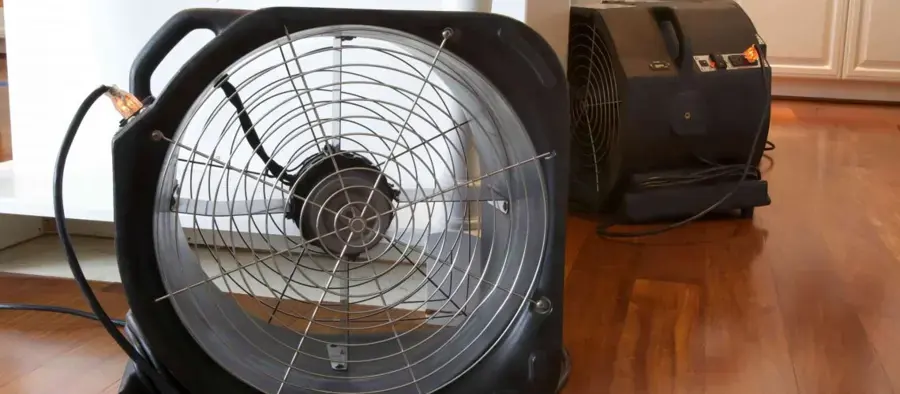
A burst pipe water damage job follows the same order when a pipe fails inside a wall or ceiling. Dehumidifiers and air movers then dry the slab, the framing and the wall bottoms until readings match a dry reference.
- Extract: standing water comes out first.
- Lift: wet flooring and pad are removed so the slab can dry.
- Open: the bottoms of walls are cut open where the drywall is wet.
- Dry: equipment runs and readings are logged each day.
Keeping the records straight
A leak under a floor is easy to dispute and hard to see, so records matter. The same approach is used for a slab leak cleanup anywhere in the area, and water damage restoration here starts with the same readings.
- The date and reading of the water meter before and after the water is shut off.
- The plumber's findings, including where the leak was and what failed.
- Dated photographs of wet floors, walls and any lifted flooring.
- Daily moisture readings from the drying team.
Questions
Were the 2018 breaks caused by home plumbing?
No. They were in city water pipes, and the soil explanation comes from KTUL's report. Home plumbing is a separate system.
Does swelling soil break pipes inside homes too?
It can strain pipes that sit in or against moving soil, which is why joints and fittings are checked. A plumber confirms the cause of any one leak.
How can a homeowner check for a hidden leak?
Turn off every fixture and watch the water meter. If the dial keeps turning, water is going somewhere.
What if the whole street loses water?
That points to a break in the city's pipes, which city crews repair. Once service returns, the meter and the floors are still worth a check for a leak inside the home.
Is all of the soil here expansive clay?
No. The soil survey maps several soils, and the clay rich ones fall mostly in the moderate shrink swell class.
Who repairs a leak under the floor?
A plumber repairs the pipe. The restoration team extracts the water and dries the structure.