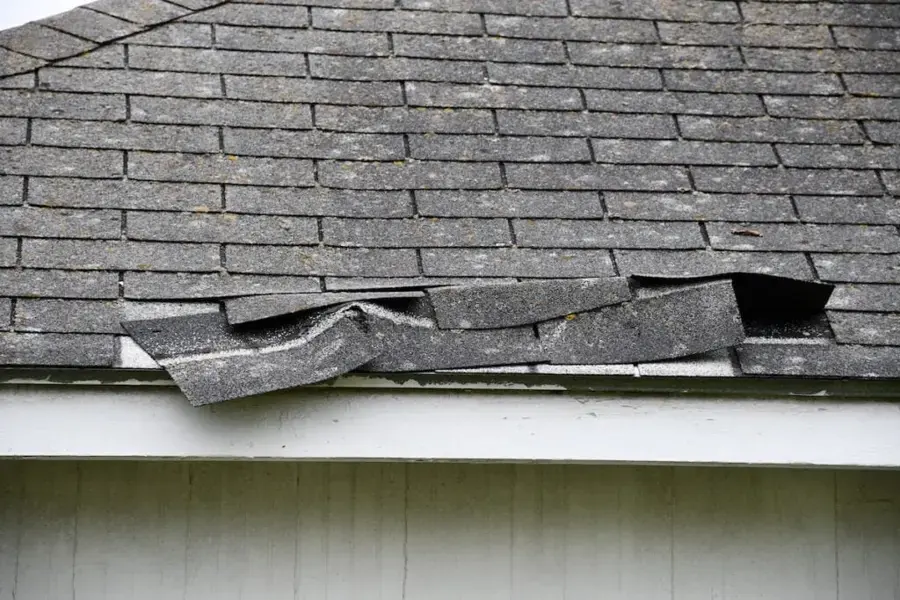
A tornado damages a roof once, but rain can keep coming through the opening for weeks. After the May 25, 2024 tornado, the City of Claremore said approximately 800 homes were damaged, along with multiple businesses and public facilities. For those homes, every storm that followed was a second round of damage.
Key takeaways
- The May 25, 2024 tornado damaged approximately 800 homes, and EF2 damage east of downtown partially removed the roofs of two homes and a two story building.
- Every rain on an opened or tarped roof can wet attic insulation, ceiling drywall and wall cavities, so tarping and drying cannot wait for the rebuild.
- A stained, bulging ceiling is holding water and should be kept clear of people until it is opened and drained.
- Drying equipment needs electricity, and power was out across the area after the storm, so a power plan belongs in the drying schedule.
- Older homes, including historic ones built before statehood, need slower and more careful drying.
What the tornado left behind in Claremore
An EF3 tornado moved through the city on the night of May 25, 2024. The National Weather Service damage survey found EF2 damage just east of downtown, where two homes and a two story building had their roofs partially removed and power poles were snapped.
Reports after the storm described the tornado blowing through historic neighborhoods and damaging homes built before statehood, including one built in 1902. Fallen trees wiped out the wrap around porch of one historic house.
All four substations were affected, and power was out across the area. The city said service was restored on June 12, 2024, after early estimates of three to four weeks.
The housing mix shows who is affected when a roof opens. The American Community Survey counts 8,493 housing units in the city, and about 70.7 percent are single family detached homes, where a roof opening wets one household.
Another 1,204 units sit in buildings of five or more units, where one roof opening can wet several apartments.
How rain follows wind damage into a house
Wind rarely leaves a clean hole. It lifts shingles, peels back flashing, tears off sheathing and cracks windows, and each gap lets rain in, which is how storm water damage starts.
Through the roof and into the attic
Rain soaks the attic insulation first. The insulation holds the water and passes it to the ceiling drywall below, which is why the first stain often shows up far from the damaged spot.
Other openings that let rain in
- Cracked or missing windows.
- Torn flashing around chimneys, vents and skylights.
- Opened eaves and gable ends.
- Damaged siding and trim.
Into ceilings and wall cavities
- Ceiling drywall absorbs water, stains and then bulges or sags.
- Water runs down inside wall cavities from the top of the wall.
- Light fixtures and ceiling fans can carry water into the room.
- Flooring below stays wet where the drips land.
What a tarp does, and what it cannot do
A tarp sheds most rain, and it should go on as soon as it is safe. It does not dry anything.
Wet insulation and drywall can also start to grow mold within 24 to 48 hours, and warm, humid spring air speeds that up. Waiting for the final roof repair is a long wait with wet materials inside.
- Wind driven rain can still get in at the edges and seams.
- Water that got in before the tarp is still sitting in the insulation and the drywall.
- A tarp that shifts in the wind opens the roof again.
- Damp insulation under a tarp can stay wet for weeks if nobody opens it and dries it.
First steps inside the house
Safety and drainage come first. Only then does it make sense to start drying.
- Keep everyone out from under a bulging ceiling, because a heavy wet ceiling can let go.
- Switch off power to wet fixtures and outlets if the panel can be reached dry.
- Move furniture, rugs and electronics out of the drip zone.
- Photograph the stains, the roof damage and the tarp before repairs begin.
- Ask the roofer to cover the opening first, and ask the drying team to open and dry what is already wet.
What the drying team removes and dries
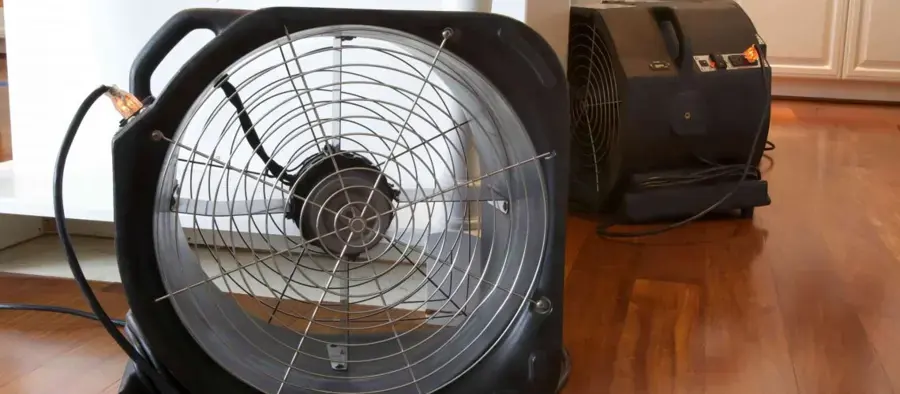
A roof leak water damage job starts at the opening and works down. The team removes wet insulation, opens ceiling sections that hold water and dries the joist bays and wall cavities.
A ceiling leak that has sagged or stayed stained after the rain stops is opened, because trapped water does not leave on its own.
The ceiling, the attic and the walls dry at different rates, so equipment is moved and adjusted as the readings improve.
- Insulation: soaked insulation is removed, since it keeps water against the drywall.
- Drywall: stained or sagging sections are cut out and the cavity is dried.
- Framing: joists and the tops of walls are dried with air movers and dehumidifiers.
- Readings: moisture meters and a thermal camera show where water remains.
Drying an older or historic home
The same survey counts 456 homes built in 1939 or earlier and 242 built from 1940 to 1949. Older framing, original floors and porches can dry differently from newer homes, so the team measures before it decides.
The Downtown Claremore Historic District is on the National Register of Historic Places, and the storm reached historic homes as well. For those, slow and careful drying protects original materials.
Without power, dehumidifiers and air movers cannot run. A generator, or a date when service returns, belongs in the plan from the start.
Records for the claim file and the rebuild
The roof repair, the ceiling repair and the drying are three separate jobs, and good records tie them together.
Dates matter because several storms can pass over an open roof. A note of which rain caused which stain helps sort out the damage.
The same records support any roof leak cleanup job, and local water damage restoration keeps them as the work goes.
- Dated photographs of the roof opening, the tarp and each stain.
- Moisture readings before drying starts and on each day of the dry out.
- A list of damaged belongings with the condition of each.
- Receipts for emergency repairs such as tarping.
Questions
Should the roof be tarped before drying starts?
Yes, as soon as it is safe, because each new rain adds water. The drying team can open and dry what is already wet at the same time.
Why does a ceiling stain keep growing after the rain stops?
Wet insulation and drywall keep releasing and spreading water until they are dried or removed, so a stain can keep growing for days.
Can wet attic insulation be dried in place?
Rarely. Soaked insulation compresses and holds water against the ceiling, so the wet part is removed and replaced after drying.
How soon after a storm should drying start?
As soon as it is safe to enter. Water that sits in insulation and drywall keeps spreading, and every extra day makes the loss larger.
How is drying handled when the power is out?
Dehumidifiers and air movers need electricity. When service is down, drying waits for power or runs on a generator, and the team keeps taking readings so the wet areas are known.
Does a historic house dry differently?
Often. Older framing, floors and porches react to water in their own way, so drying is paced by readings instead of a standard schedule.