On May 22, 2026, heavy rain made a creek beneath part of Main Street overflow into nearby buildings and streets. For a shop or office owner in Collinsville, the first day decides how much stock, flooring and schedule can be saved. The steps below follow the order a drying team works in.
Key takeaways
- The creek beneath part of Main Street overflowed on May 22, 2026, and water reached nearby buildings, so downtown is a place where a flood plan belongs.
- Creek water is Category 3, so carpet, pad, insulation and lower drywall are removed before drying starts.
- Lift stock, records and electronics first, then photograph the high water mark before anything else moves.
- Original brick storefronts dry in phases, and a plan can keep dry sections open where it is safe.
- Moisture readings, not a calendar date, decide when the equipment leaves.
What happened on Main Street on May 22, 2026
That day, heavy rain made a creek running beneath part of Main Street overflow, pushing water into nearby buildings and streets. Tulsa County officials also reported flooding along parts of Bird Creek, Snake Creek and Caney Creek, and barricades blocked several flooded roads.
Downtown has a Central Business District where many original buildings from the late 1800s and early 1900s are still in use, along with antique stores, an art gallery and boutiques. The city approved a Historic Preservation District covering downtown in July 2024.
Flooding was reported along several creeks that day, so a flood plan is better built around the building than around one creek. For buildings like those downtown, a short flood can still mean a long dry out.
The first day, in order
Safety and speed pull in different directions after a flood. Safety goes first, then speed, because damp drywall and wood can start growing mold within 24 to 48 hours.
A commercial water damage response follows the same order.
- Safety: keep out of moving or standing water, keep the power off to wet areas and leave any gas smell to the gas company.
- Stock and records: lift paper, electronics and inventory off the floor once the water has dropped and it is safe to enter.
- Valuables: move cash, laptops, tablets and key documents to a dry, secure place.
- Photographs: capture the high water mark, the stock and the fixtures before moving anything.
- Tell the building owner: if the space is leased, the landlord and neighbors need to hear about it right away.
- Extraction: have the extraction crew pull standing water before it settles into flooring and the bottoms of walls.
What can wait until the second day
- Sorting every damaged item into keep and discard piles.
- Cleaning out shelves, display cases and storage rooms that stayed dry.
- Calling suppliers, customers and staff about reopening dates.
- Choosing finishes and details for the rebuild.
What creek water does inside a downtown building
Creek water is Category 3. It carries soil, sewage and debris, so anything porous that it touched is removed instead of dried and kept.
What comes out first
- Carpet, pad and any rugs the water reached.
- Drywall and insulation, cut out above the visible water mark.
- Cabinet bases, trim and baseboards that soaked up water.
- Stock and packaging made of paper, cardboard or fabric.
What can often be cleaned
Metal, sealed wood, glass and hard plastic fixtures can usually be washed and treated. Display cases, shelving and equipment are checked one by one, because water inside a motor or a cabinet is easy to miss.
What older materials do
Original buildings often mix brick, wood floors and older wall finishes, and each one dries at its own pace. Dense brick and old wood hold moisture longer than new board does.
Drying an original storefront in phases
A dry out in a working business is planned around the doors. The drying team contains the wet zone, dries it first and leaves dry sections open where it is safe.
Wood floors over joists and old plaster or board walls are dried at the pace the readings allow, because forcing the air too hard can cup boards and crack finishes. The team adjusts the equipment as each zone reaches its target.
A flood damage cleanup is followed by structural drying, with readings taken at the same points each day.
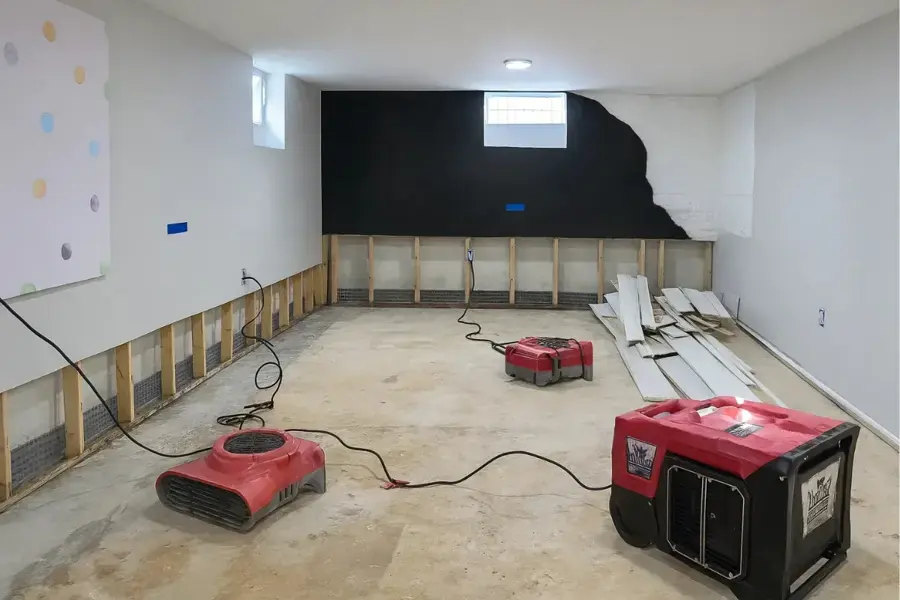
- Phase one: extract the water, remove wet materials and set containment.
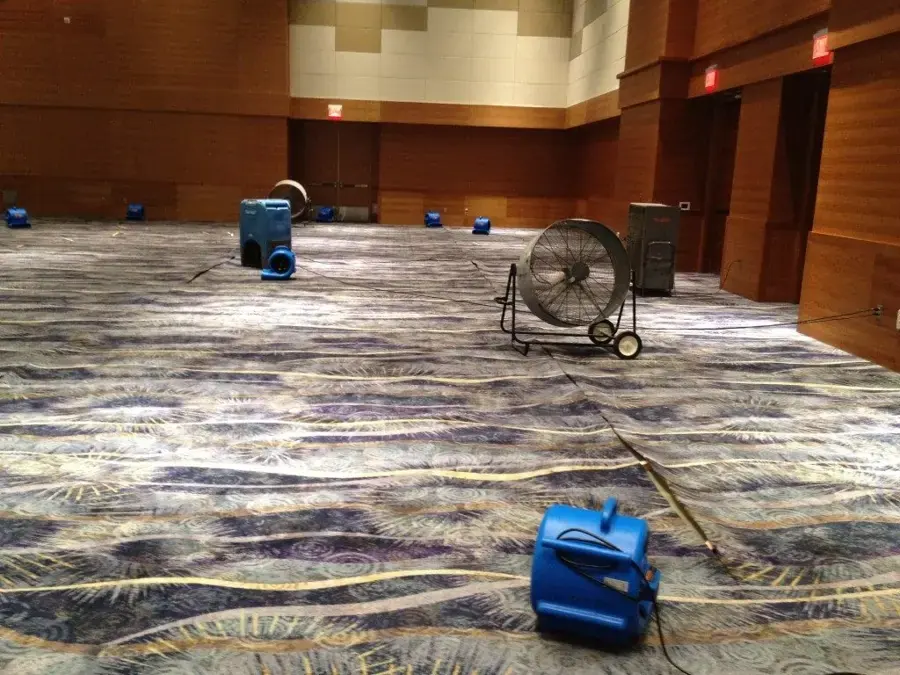
- Phase two: run dehumidifiers and air movers in the wet zone while dry areas stay open.
- Phase three: read the walls and floor at the same points each day and move equipment as zones dry.
- Phase four: confirm dry readings before any rebuilding starts.
Keeping staff and customers safe while work goes on
A building that is partly open still needs clear boundaries. Equipment, hoses and cut walls are hazards for anyone walking through.
- Mark and close the wet zone, and keep customers on the dry side.
- Tell staff which doors and areas are closed and who may enter the work zone.
- Keep cords and hoses out of walkways, or cover them where they cross.
- Leave the power off in wet areas until it has been checked.
- Reopen only when the floors are safe to walk on and the drying team agrees the dry zone is separate.
Records, permits and a plan for the next rain
Written records keep the facts clear for the owner, the landlord and anyone else who needs them later. The drying log produces most of them as the work goes.
The city's Development Services handles building permits, and residents can contact it to confirm that a contractor has proper permits and insurance. The same first day order applies to every water damage restoration job downtown, and to any commercial water damage restoration loss, large or small.
- Photographs of the water mark, the stock, the equipment and the fixtures.
- A list of damaged inventory with quantities and condition.
- Daily moisture readings and equipment logs from the drying team.
- Dates and times for when the water arrived, when it was extracted and when work began.
- Contact details for the landlord, the drying team and the city.
- Plan: a one page list for the next heavy rain with the breaker, the shutoff, what moves first and who to call.
Questions
Can a shop stay open during the dry out?
Sometimes. The drying team can contain the wet zone and keep dry sections open where it is safe, with power and air quality deciding what is possible.
Why do old brick buildings take longer to dry?
Dense brick and old wood hold water longer than new board, so drying is measured wall by wall instead of guessed.
Is creek water different from rain that leaks through a roof?
Yes. Creek water is Category 3 and carries sewage and debris, while roof rain is usually cleaner, so the cleanup steps differ.
What should be moved first?
Paper records, electronics and stock that can be lifted, once it is safe to enter. Heavy fixtures can wait for the crew.
Who confirms permits for repairs?
The city's Development Services handles building permits, and residents can contact it to confirm that a contractor has proper permits and insurance.
When is a flooded building ready to rebuild?
When the drying log shows readings that match a dry reference for the walls, the floor and the framing. Rebuilding on damp materials only hides the problem.