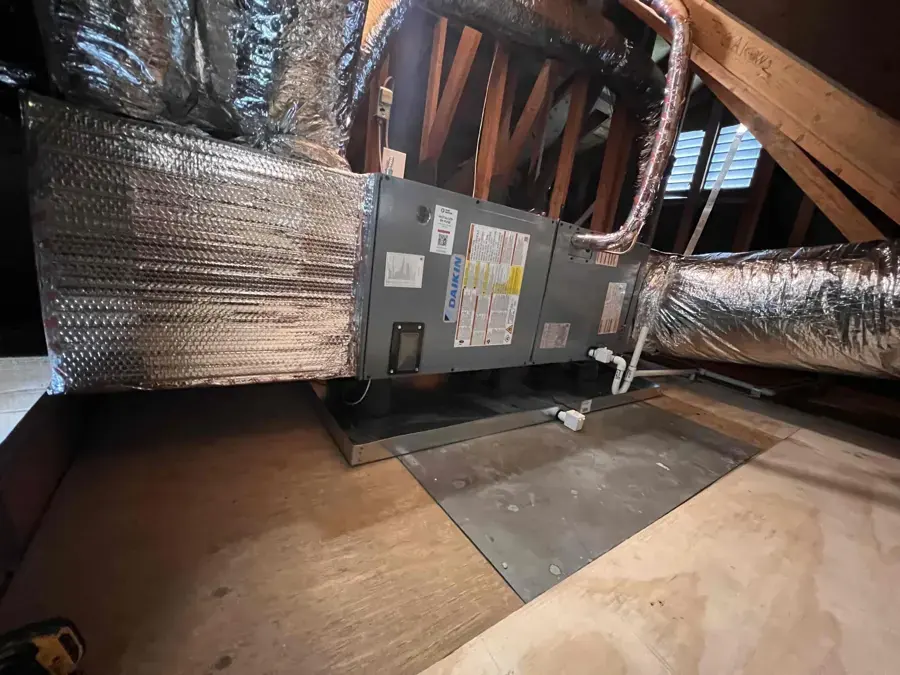
Many Owasso homes keep the furnace and air handler in the attic. When the small drain that carries off air conditioner condensate clogs, the water has nowhere to go but down through the ceiling. By the time a stain shows, the insulation above it is usually soaked.
Key takeaways
- An air conditioner makes water every time it cools, and a clogged condensate drain sends that water into attic insulation and the ceiling below.
- Switch the system off at the thermostat first, so it stops making more water.
- A ceiling that bulges or sags is holding water, so keep people and furniture out from under it.
- Soaked insulation usually has to come out, because it keeps water pressed against the drywall.
- An HVAC technician fixes the drain, and the drying team handles the ceiling, the insulation and the framing.
Why the attic is where the water starts
An air conditioner pulls moisture out of the air as it cools, and a small drain carries that water away. In a humid Oklahoma summer, an air handler can make a lot of it.
When the unit sits in the attic, a clog or a cracked pan sends the water across the attic floor instead. It soaks the insulation, then works down into the ceiling drywall.
Many homes here use that setup, and the median home dates to the early 2000s. The usual causes come down to a short list.
- A blocked drain pipe, usually from algae or sludge that builds up inside it.
- A rusted or cracked drain pan under the unit.
- A drain pipe that sags, so water sits in the dip instead of running out.
- No float switch, so nothing shuts the unit off when the pan fills.
What shows up inside the house first
The first sign is rarely in the attic. It is a stain, a blister in the paint or a drip that starts after the system has run for a while.
Signs on the ceiling
- A tan or brown stain that grows after the system runs.
- Paint that bubbles or peels in one patch.
- A ceiling that bulges or sags between the joists.
- Drips near a light fixture, vent or ceiling fan.
Signs in the attic
If the attic can be reached safely, wet or flattened insulation, rust streaks on the pan and a damp attic floor all point to the unit as the source.
Why the stain is not always under the leak
Water follows the framing. It runs along joists and spreads through insulation before it finds a place to soak through, so the stain can sit several feet from the pan.
That is why the whole ceiling around a stain is checked with a moisture meter and a thermal camera, not only the stained patch.
First steps and hazards when the ceiling is wet
Running the system on a blocked drain only adds water, so shutting it off comes first. The attic AC leak cleanup can start once the unit is off and the overflow has stopped.
- Switch the air conditioner off at the thermostat.
- Set a bucket under the drip and move furniture, rugs and electronics out of the way.
- Stay away from light fixtures and fans in a wet ceiling, and switch off that circuit if the panel is dry.
- Keep people out from under any bulge, because a heavy wet ceiling can let go.
- Photograph the stain, the drip and the pan if it can be reached safely.
Hazards to avoid
- Do not walk on attic insulation or between the joists, since a foot can go through the ceiling.
- Do not touch the air handler's wiring or switches with wet hands.
- Treat recessed lights, fans and fixtures in a wet ceiling as live until the circuit is off.
- Do not push on a bulge, and do not stand under it.
What the drying team removes and dries
The team starts in the attic, tracing the water back to the pan or the drain and mapping how far it traveled across the joists. Any water that pooled is removed first by water extraction.
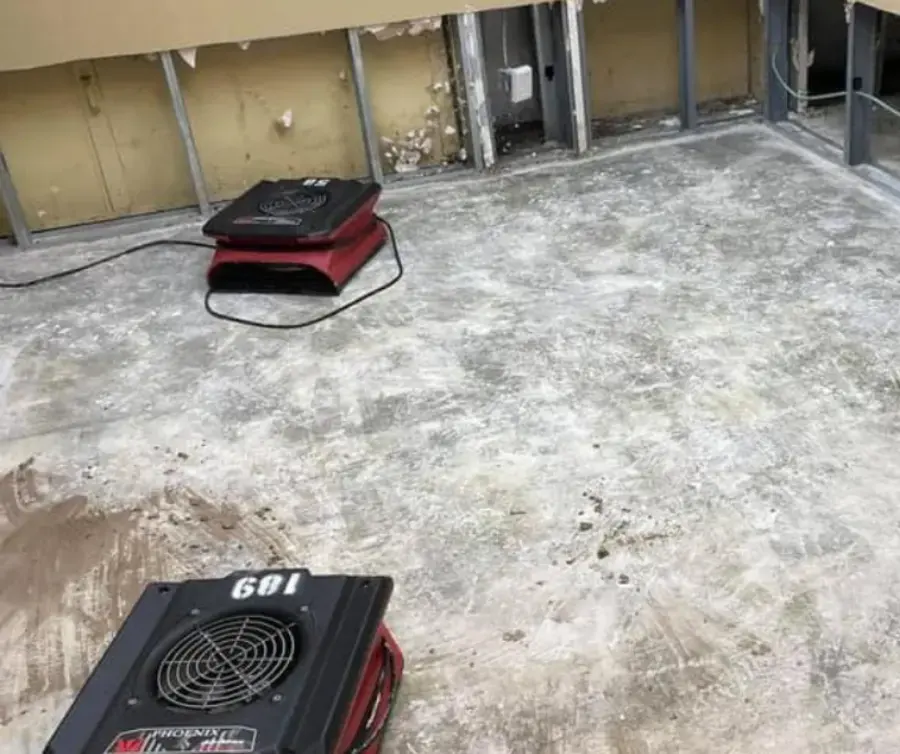
A ceiling leak water damage job then moves downstairs, where stained or sagging drywall is opened so trapped water can drain.
- Insulation: soaked insulation is bagged and removed, because it holds water against the drywall.
- Ceiling drywall: stained or sagging sections are cut out, and the joist bay is opened to the air.
- Framing: joists and the back of the drywall are dried with air movers, with a dehumidifier running below.
- Readings: a moisture meter and a thermal camera find wet areas the eye cannot see and set how long the equipment runs.
How long wet drywall and insulation can wait
Water from a condensate drain starts out clean, which is Category 1 under the IICRC S500 standard. As it passes through dusty insulation and sits, it can degrade, and the longer it stays, the more of the ceiling is lost.
Wet drywall and insulation can also start to grow mold within 24 to 48 hours, which is why a small stain should be treated as a leak, not a blemish.
The structural drying team keeps measuring until the ceiling and framing match a dry reference, so painting waits for the readings.
Who fixes what, and how to stop a repeat
An HVAC technician clears the drain, replaces a rusted pan or adds a float switch that shuts the unit off when the pan fills. The drying team dries what the water reached, and an insulation contractor replaces what had to come out.
A cooling season tune up can include checking the slope of the drain pipe, flushing it, inspecting the pans and testing the float switch.
- Have the condensate drain flushed at each cooling season tune up.
- Ask about a float switch or a second pan under the unit.
- Check ceilings under the attic unit after hot, humid stretches.
- Treat any new stain as a leak, even a small one.
Questions
Why does the ceiling leak mostly in summer?
The air conditioner makes water only while it cools, and humid days make the most. A drain that clogs during the season shows up as a stain.
Can the air conditioner keep running with a stain on the ceiling?
It should stay off until a technician clears the drain and checks the pan, because every cooling cycle adds more water.
Does all of the attic insulation have to be replaced?
Usually only the wet part. Soaked insulation compresses and holds water against the drywall, so it is removed and replaced after the ceiling is dry.
Is the water from an air conditioner drain dangerous?
It starts out clean, but it picks up dust and debris from the attic and can degrade. That is why wet insulation is removed instead of dried in place.
Who comes first, the HVAC company or the drying team?
Both are needed, and neither replaces the other. Switch the unit off, then have the drain fixed and the ceiling dried so the leak does not return into a wet ceiling.
Can a stained ceiling just be painted?
Not until the drywall and framing read dry. Paint over a damp ceiling traps moisture, and the stain usually comes back.