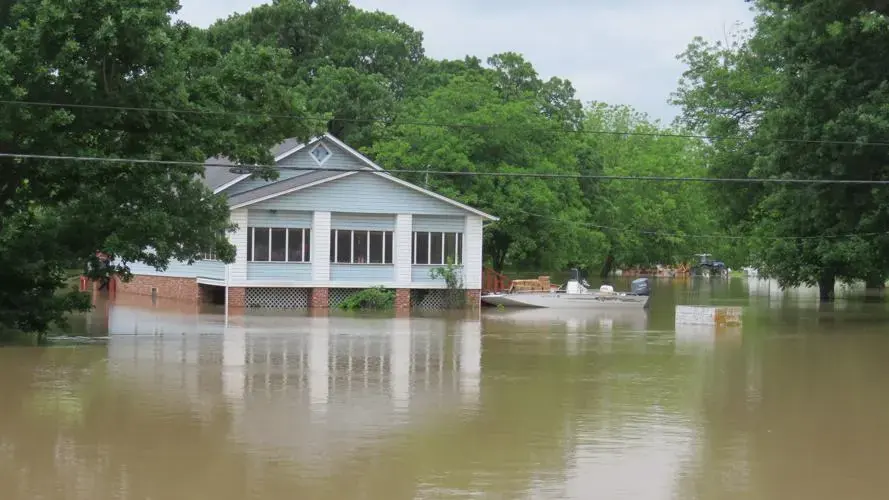
On May 25, 2025, flooding near Elm Creek Park in Owasso submerged cars and reached front yards. Elm Creek runs through the city, and water that rises along it does not stop at the edge of a lot. When it reaches a house, the next few days decide how much of the home can be saved.
Key takeaways
- Flooding near Elm Creek Park in May 2025 reached front yards, and the city has studied repeated flooding along a tributary of the creek.
- Floodwater that enters a house is Category 3, so carpet, pad, insulation and lower drywall come out before any drying starts.
- Many local homes are built on a slab, so water spreads thinly across every room instead of pooling in one place.
- Stay out of the water, keep the power off to wet rooms and photograph the high water mark before anything moves.
- Drying ends when moisture readings match a dry reference, not when the surface feels dry.
What happened near Elm Creek Park in May 2025
The town was first named Elm Creek, and the creek still runs through the city. Water has been a repeat problem in the Elm Creek Basin.
Three local facts set the scene.
- May 25, 2025: flooding near Elm Creek Park submerged cars and reached front yards.
- Repeat flooding: the city funded a flood study of the Elm Creek Basin after repeated flooding along the Pine Valley tributary.
- Season: May is the wettest month in the Tulsa area, so late spring storms are the time to expect high water.
Why floodwater is handled as Category 3
Water that rises from a creek or runs in from a flooded street picks up soil, sewage and debris on the way. The IICRC S500 standard classes it as Category 3 from the start.
Color is not a test. Water that looks fairly clear is still Category 3 if it came from a creek or a street.
That label changes the job, which is why a flood damage cleanup starts with removal. Porous materials the water touched are removed, not dried and kept.
What comes out
- Carpet and pad: both are removed, even if the carpet looks clean once the water drops.
- Drywall: the board is cut out above the visible water mark so the crew reaches clean, dry material.
- Insulation: wet insulation inside the walls goes out with the drywall.
- Soft contents: upholstered furniture and mattresses that soaked up floodwater usually cannot be cleaned.
What can stay
Framing, concrete and hard surfaces are washed, treated with an EPA registered antimicrobial and dried. Sealed wood, metal and plastic items can often be cleaned and kept.
How a slab home takes on water
Brick ranch and two story homes on a slab, with an attached garage, are common here, and the median home dates to the early 2000s. In a house like that, floodwater does not collect in a basement.
It spreads in a thin layer across every room at once, and thin water still reaches a lot of flooring.
It also finds the gaps at the bottom of the walls. From there it soaks insulation and drywall that no one can see, which is why a thermal camera and a moisture meter matter.
- Floors: tile, laminate and hardwood can lift, cup or loosen as water gets underneath.
- Wall bottoms: drywall pulls water upward, so the damage climbs above the water mark.
- Cabinets: toe kicks and lower cabinet boxes soak up water and are often removed.
- Slab: concrete is porous and holds moisture long after the surface looks dry.
The first day after creek water enters a home
Safety comes before cleanup. Once the water has dropped and it is safe to enter, the water extraction crew can pump and extract before the water soaks deeper into the slab and walls.
If floodwater reached the furnace, the water heater or the electrical panel, leave them off until they have been checked.
- Stay out: do not wade into standing or moving water, and wait until the power to the area is off.
- Power and gas: switch off breakers for wet rooms only if the panel can be reached dry, and leave any gas smell to the gas company.
- Photographs: capture the high water mark on the walls, the flooring and every damaged item before anything is moved.
- Contents: lift dry belongings onto high shelves, and set aside anything floodwater touched.
- Children and pets: keep them out, since the water is contaminated.
How the dry out is done and verified
The dry out starts with containment and protective gear, then a muck out of silt and debris.
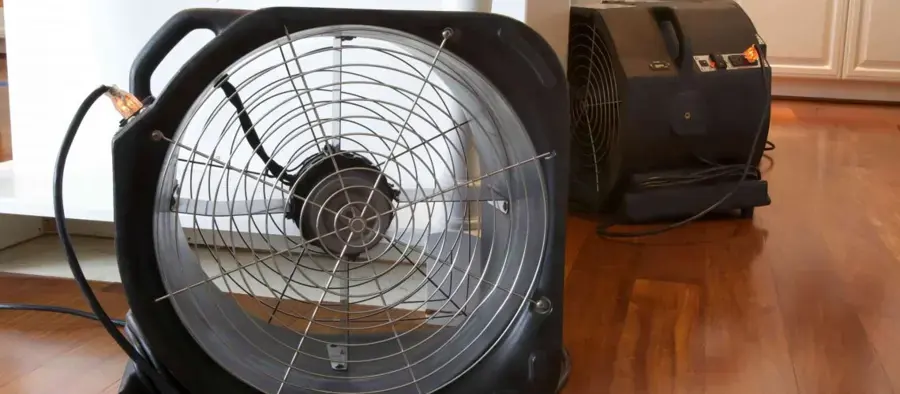
After removal and cleaning, dehumidifiers and air movers run while moisture meters and a thermal camera show what is still wet.
Readings are logged each day, and structural drying ends on those readings, not on a calendar date.
- Muck out: silt, mud and debris are shoveled and vacuumed out first.
- Clean and treat: framing and hard surfaces are washed and treated before drying begins.
- Dry: dehumidifiers and air movers run until the framing and slab read dry.
- Verify: the equipment stays until daily readings match a dry reference.
Mistakes that make a flood loss bigger
A few well meant moves add to the damage, so they are worth avoiding.
- Waiting until every drop has left the street before arranging help, since planning can start while the water drops.
- Running a household vacuum on wet floors, which is a shock hazard and spreads contamination.
- Turning on fixtures or outlets in a room where water has reached them.
- Keeping soaked carpet or furniture in the house to look at later, instead of photographing it and setting it out.
- Closing up or painting walls before readings show they are dry.
Records and a plan for the next rise
An insurance claim file runs on facts, so write them down while they are fresh: the date, the water mark and what was lost. The team's photos and daily moisture readings fill in the rest.
Because flooding near Elm Creek has repeated, a short plan is worth making now. Know where the main breaker is, which belongings go up first and who to call.
Rain pushed in through windows and doors by wind is a different case, handled as storm water damage cleanup.
- Photos taken before anything is removed.
- The water mark measured on each wall.
- A list of discarded items with the condition of each.
- Daily moisture readings from the drying team.
Questions
Is creek floodwater always Category 3?
Yes. Creek and street water pick up soil, sewage and debris as they move, so the S500 standard classes them as Category 3 even when they look clear.
Can flooded drywall be dried instead of cut out?
Not after Category 3 water. Contamination can stay in the board, so the crew removes what the floodwater touched.
Why does the slab need so much attention?
Concrete is porous and holds water. If it stays damp, moisture keeps rising into flooring and wall bottoms, so it is dried until readings match a dry reference.
Should the cleanup wait until the creek goes down?
Entry waits until it is safe, but planning does not. Extraction and removal can start as soon as the water has dropped, and every day of delay lets water soak further into the slab and walls.
How long does drying take after the water is gone?
That depends on how far the water spread and what the materials are. Equipment runs until daily readings say dry, which is why no calendar date is promised.
What should be photographed before cleanup starts?
The high water mark on each wall, the flooring, damaged furniture and appliances, and anything that will be thrown out. Photos taken before removal are the hardest to replace.