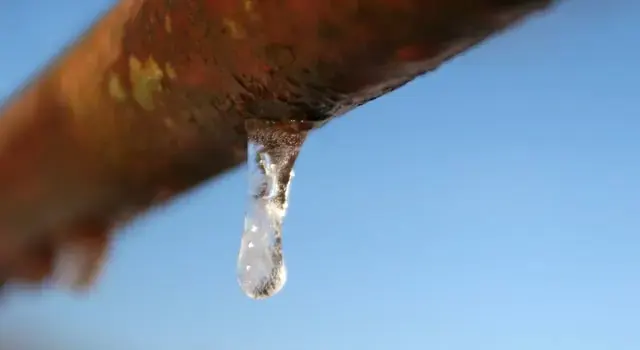
Tulsa's hardest freezes do not break pipes in one place. In February 2021 the city reported more than 120 breaks in its water pipes, and Winter Storm Fern in January 2026 was followed by at least 19 water main breaks within days. Inside homes, the same cold does a different kind of damage.
Key takeaways
- City water main breaks and frozen pipes inside a home are different problems: city crews repair the first, and the second floods a building.
- The city's hazard plan says frozen water pipes that break can flood building interiors.
- The city says to shut off the water at the home's private shutoff valve if there is one, and otherwise to call its after hours water emergency number and then a plumber.
- The flooding often starts at the thaw, when ice that was holding back the water melts.
- Ice storms are a bigger winter threat than blizzards, and winter storms can come anytime from November to March.
Two freezes, two sets of city numbers
On February 15, 2021, the city tied its lowest daily mean temperature on record, 1 degree below zero. By the city's February 17 update, crews had counted more than 120 breaks in the water pipes.
Water was shut off to about 1,300 residents and 43 businesses, 35 crews were in the field and the fire department turned off 190 fire suppression systems that had problems. Residents were asked to conserve water, and no boil order had been issued at that point.
In January 2026, Winter Storm Fern was followed by at least 19 water main breaks by January 27. The city said deep freeze and thaw cycles cause such breaks and called them a normal part of winters here.
Those figures count breaks in city pipes, not pipes that burst inside houses, so they say little about how many homes were flooded.
Why a main break is not a burst pipe at home
City water main breaks
A main break is in the city's own pipes under the street. City crews repair it, and for most households the visible effect is lost or low water pressure.
One example came on January 26, 2026, when a 16 inch main broke near 21st Street and Lewis Avenue. It closed eastbound lanes and left about 30 customers, including nearby businesses, without water.
Frozen pipes inside a home
A pipe inside a home is the one that wets drywall, flooring and belongings, which is why a frozen pipe burst cleanup is a different job from a main repair. The city's hazard plan says frozen water pipes that break can flood building interiors.
Pipes in attics, garages and outside walls freeze first, because they sit outside the heated space.
What the city says to do first
For a burst pipe, the city says to shut off the water at the home's private shutoff valve if there is one. If there is not, it says to call its after hours water emergency number and then a plumber.
- Find the private shutoff valve before winter, not during a leak.
- Open a faucet or two once the water is off, so the pipe can drain.
- Switch off power to wet areas if the panel can be reached dry.
- Photograph the split pipe, the wet areas and any damage.
- Move belongings away from wet floors and walls.
- Call a plumber for the repair and the restoration team for extraction and drying.
Most of the water comes at the thaw
A frozen pipe often splits while it is still frozen, but the ice acts like a plug. The water only pours out when the ice melts.
That is why a ceiling that looked dry during the cold can be soaked by the afternoon thaw, and why attics and outside walls deserve a look after a freeze.
- Ceilings under pipes that run through an attic.
- Garage walls and ceilings.
- Walls on the outside of the house.
- Cabinets under sinks on outside walls.
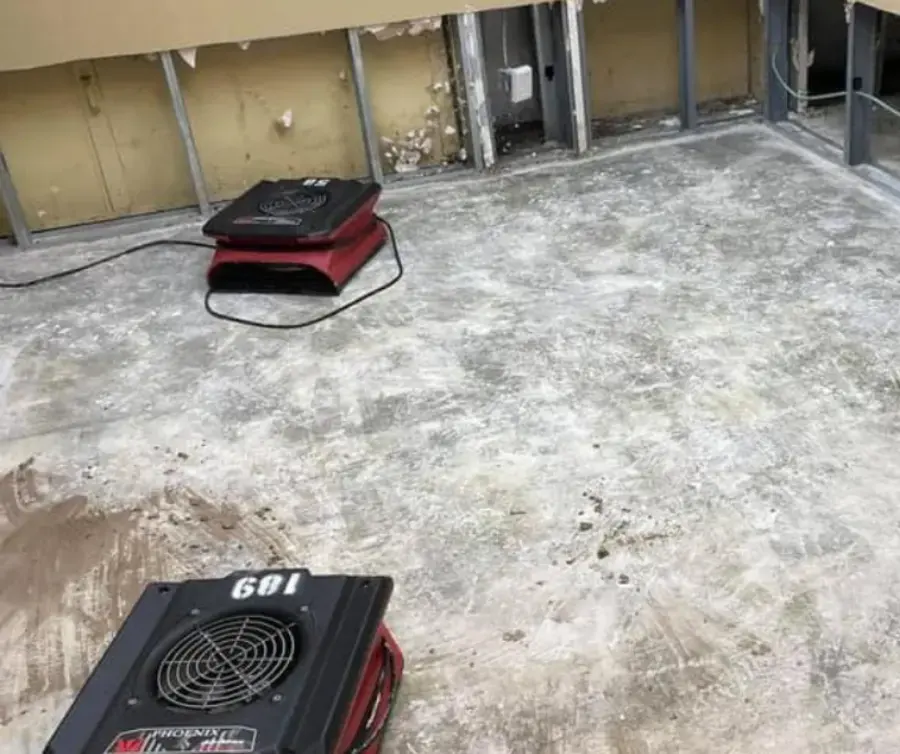
Drying after a burst pipe
A cleanup begins with the water shut off and the standing water extracted.
A burst pipe water damage job then opens the walls and ceilings that are holding water, removes wet insulation and dries the cavities. Wet materials can start to grow mold within 24 to 48 hours, which is why the opening and drying cannot wait.
Hardwood and laminate floors under a leak can cup or buckle even after the water is gone, so floors are checked with moisture meters before anything is closed up.
- Extract: standing water is pumped or vacuumed out.
- Open: wet drywall and insulation are cut out where readings stay high.
- Dry: dehumidifiers and air movers run in the wet rooms.
- Verify: daily readings show when framing and floors match a dry reference.
Rentals, empty houses and second homes
Nearly half of the city's occupied homes are rented: 83,137 of 172,909. A frozen pipe in a rental involves a tenant, a landlord and sometimes the neighbors below.
A house that sits empty during a freeze can leak for days before anyone sees it.
Tenants and landlords both benefit from the same record: dated photographs, the time the water was shut off and written notice.
- Tenants: tell the landlord at once and photograph the damage.
- Landlords: know where each unit's shutoff valve is.
- Empty homes: keep the heat on and ask someone to check the house during a hard freeze.
Getting ready before the next hard freeze
The city averages about three nights a year below 10 degrees, and its most recent reading below zero was 2 degrees below zero on January 16, 2024. The hazard plan says ice storms are a bigger threat than blizzards, with winter storms between November and March.
Pipes in unheated spaces freeze first, so insulation goes where the cold gets in first.
The same steps apply to any frozen pipe burst loss, and local water damage restoration starts with the shutoff.
- Find and test the private shutoff valve.
- Insulate pipes in attics, garages and outside walls.
- Let a faucet drip on the coldest nights.
- Open cabinet doors on outside walls so warm air reaches the pipes.
- Keep the heat on, even if the house will be empty.
Questions
Is a city main break the same as a burst pipe at home?
No. A main break is in the city's pipes under the street, and city crews repair it. A burst pipe inside a home wets the building and needs extraction and drying.
Who should be called when a pipe bursts?
Shut off the water at the private valve if there is one. Otherwise the city says to call its after hours water emergency number, then a plumber.
Why does the damage show up after the freeze ends?
Ice can plug a split pipe. When it thaws, the water flows into walls, ceilings and floors.
Does a dripping faucet really help?
A slow drip keeps water moving and relieves pressure that builds when ice forms, which lowers the chance of a split.
What if the house will be empty during a freeze?
Keep the heat on and have someone check the house. A split pipe in an empty house can run for days unnoticed.
How is a home dried after a burst pipe?
Standing water is extracted, wet drywall and insulation are removed where readings stay high, and dehumidifiers and air movers run until readings match a dry reference.