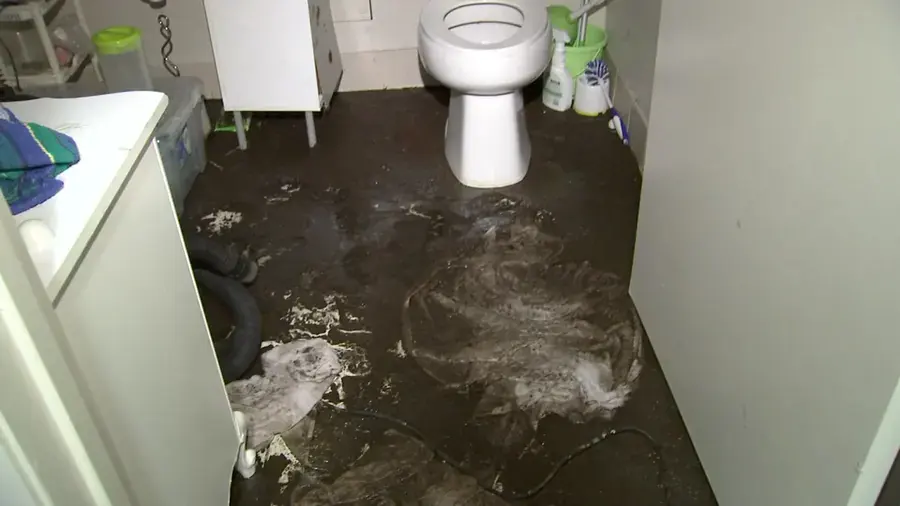
Sewage coming up through a floor drain, tub or toilet is a health problem first and a plumbing problem second. In Tulsa, the first calls go to the city's emergency sewer team and to a plumber who can tell whether the trouble is on the property or on the city's side. The cleanup starts once the water is stopped.
Key takeaways
- For any sewer emergency, the city says to stop household water use right away.
- The city has a 24 hour emergency sewer response team, and a plumber can show whether the problem is on the property or on the city's side.
- Problems on the city's side are reported to 311.
- Sewage is Category 3 water, so porous materials it touches are removed, and the area is cleaned, treated and dried.
- Urban flooding in heavy rain can back up storm sewers and fill streets, which is a different problem from a clogged home drain.
The first calls in a Tulsa sewage backup
For any sewer emergency, the City of Tulsa says to stop household water use and call its 24 hour emergency sewer response team.
A plumber can then find out whether the backup is on the property or on the city's side. Problems on the city's side are reported to 311.
Sewage in a house carries bacteria and other contaminants. The first priorities are to keep it from spreading and to keep people and pets away from it.
Waiting for it to go down on its own is a mistake, because sewage that sits in a house keeps soaking into floors and walls.
- Stop the water: no flushing, laundry, dishwasher or showers.
- Call the emergency sewer response team.
- Have a plumber find out where the problem is.
- Report city side problems to 311.
- Keep family and pets out of the affected rooms.
Signs that a backup is serious
- Water or sludge coming up through a floor drain, tub or shower.
- Toilets that gurgle, bubble or will not flush.
- Several drains slowing down at once.
- A sewer smell that keeps getting stronger.
Who runs what in the city's sewer system
The Tulsa Metropolitan Utility Authority, a public trust created by the City Charter, manages, builds and maintains the city's water works and sanitary sewer systems and sets water and sewer rates.
Wastewater goes to four major treatment plants: Northside, Southside, Haikey Creek and Lower Bird Creek.
For a homeowner the practical question is simpler: which side is the blockage on? A plumber can answer that, and the restoration team does not guess at it.
Questions a plumber can answer
- Is the blockage inside the house or outside it?
- Is the problem in one fixture or in the main drain?
- Is the city's sewer pipe also backed up?
Why a sewage backup is Category 3
Sewage carries bacteria and other contaminants, so the IICRC S500 standard puts it in Category 3 from the first moment. A sewage backup cleanup is a contamination job before it is a drying job, and nothing is dried until the contaminated materials are out.
How far the contamination travels
Sewage water moves through flooring, along wall bottoms and under cabinets. The affected area is mapped with moisture meters before anything is cut.
What comes out
- Carpet and pad that the water touched.
- Drywall and baseboards that wicked it up.
- Insulation inside wet walls.
- Cabinet bases and soft contents such as rugs and upholstered furniture.
What is cleaned and kept
Framing, concrete and hard surfaces are washed, treated with an antimicrobial and dried. Sealed hard items can often be cleaned and kept.
Backups after heavy rain
The city's hazard plan names three kinds of flooding in Tulsa: riverine, flash and urban. Urban flooding makes streets flood and storm sewers back up.
That means water in a low part of a property during a storm may not come from the home's drains at all. Whether it is sewage, storm water or both, the crew treats it as contaminated until the source is known, and water extraction comes first.
Storm drainage has its own city department. The Department of Stormwater Management began in 1985 to centralize flood, drainage and stormwater programs.
The city averages just under 41 inches of precipitation a year, and May is the wettest month at 5.9 inches, so spring storms are when heavy rain tests drains and storm sewers the most.
What to tell the plumber
- Which fixtures backed up, and in what order.
- Whether it started during or after rain.
- Whether neighbors have the same problem.
- What the plumber found and when.
How the cleanup is done
The cleanup follows a strict order so contamination is not spread from the wet room to the rest of the home.
The crew works in protective gear, and household members and pets stay out until the cleanup is done and the readings are dry.
Most of the work is removal. Because sewage soaks into porous materials, the crew spends more time on removal and cleaning than on drying.
- Contain: the area is sealed off and the crew works in protective gear.
- Extract: contaminated water is pumped out.
- Remove: porous materials the water touched are cut out and bagged.
- Clean and treat: hard surfaces and framing are washed and treated with an antimicrobial.
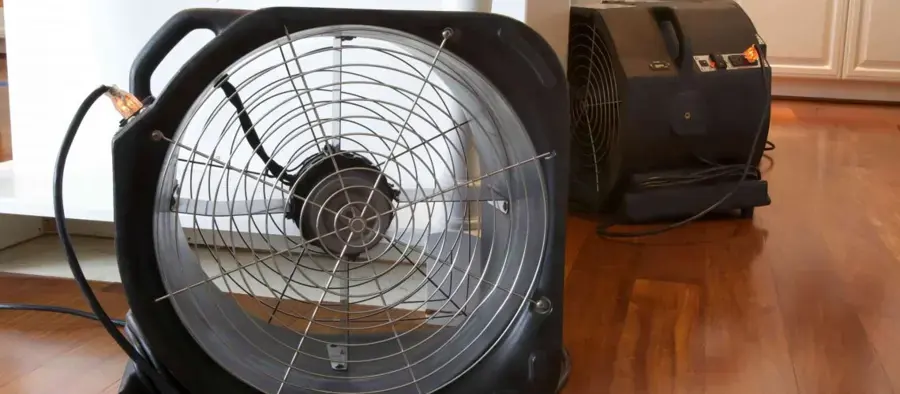
- Dry and verify: dehumidifiers and air movers run until readings match a dry reference.
Rentals and multi unit buildings
Tulsa has 52,075 units in buildings of five or more, and 83,137 occupied homes are rented. In those buildings a backup can involve a shared drain and several households.
Tell the property manager right away, and write down the time of each call and who was told.
What to avoid and what to keep
A few common reactions make a backup worse. The same care applies in any sewage cleanup, and local water damage restoration keeps the records that matter.
- Do not use a household vacuum on wet sewage.
- Do not walk through the water and then through clean rooms in the same shoes.
- Do not mix cleaning chemicals.
- Do not try to dry soaked carpet or drywall in place.
- Do keep photographs, the plumber's findings and the date and time of every call.
Questions
Who should be called first in a sewage backup?
Stop using water, then call the city's emergency sewer response team. A plumber can find out whether the problem is on the property or on the city's side.
How is a problem on the city's side reported?
Through 311. The plumber's findings tell the household which side the problem is on.
Is sewage water ever safe to dry in place?
No. Sewage is Category 3, so contaminated porous materials are removed, not dried and kept.
Can heavy rain cause a backup?
Heavy rain can flood streets and back up storm sewers. A plumber can sort out whether sewage is involved, and until then the water is handled as contaminated.
How long does a sewage cleanup take?
That depends on the size of the area and the materials. Removal and cleaning come first, and drying continues until readings match a dry reference.
Does the restoration team repair the pipe?
No. A plumber repairs pipes. The restoration team removes contaminated water and materials and dries the structure.