Water Extraction and Removal in Catoosa, OK
Pumps and truck-mount extractors pull standing water out of Catoosa houses, garages and shops, and the crew then maps what stayed wet so drying starts on the right surfaces.
☎ Call (888) 619-9509Call for pumps and extractors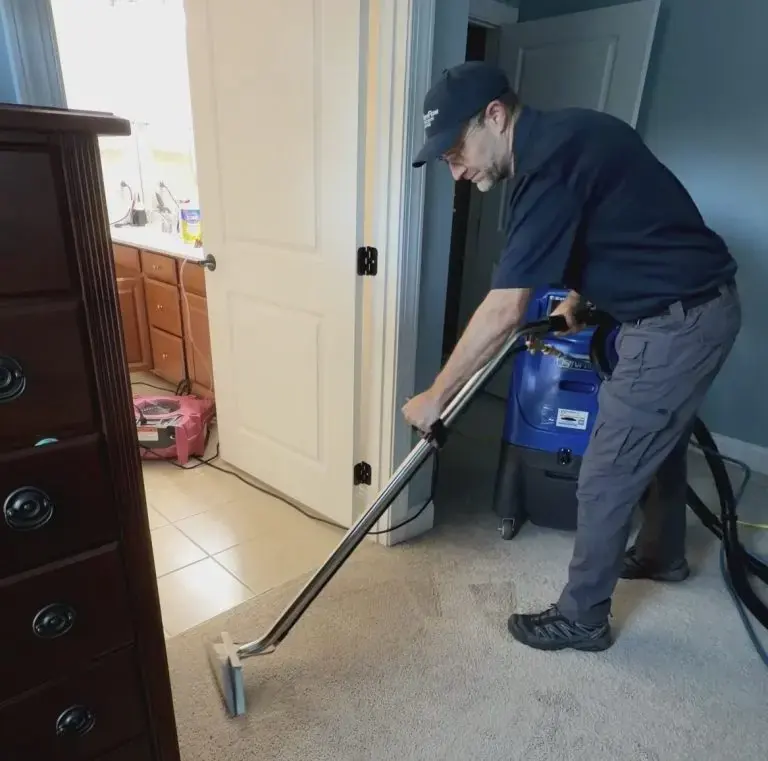
First steps for water extraction and removal in Catoosa
- Make the room safe. Switch off power to wet rooms at the breaker, but only from a panel on dry ground, and avoid rooms where water reaches outlets.
- Stop what feeds it. Close the fixture valve or the main so the amount of water to remove stops growing.
- Move the small things. Lift rugs, books and furniture legs off wet floors, and carry electronics and keepsakes to dry ground.
- Photograph before cleanup. Take wide and close photos of the high-water mark on walls, soaked items and damaged flooring before anything is thrown out.
Extraction comes first because every gallon pumped out is a gallon the dehumidifiers never have to pull from carpet, cabinets and framing. Locally that can mean a washer overflow in a rental unit or creek water standing in a garage.
What does water extraction and removal cost in Catoosa, OK?
One room usually runs $300 to $900, several rooms $1,000 to $3,000 and most of a floor $3,000 to $6,500, with depth and pad setting the price.
A single room
- Pump or wand pass
- Pad checked for water
- Readings taken
Two to four rooms
- Truck-mount wand work
- Wet pad cut out
- Carpet edges lifted
Most of a floor
- Repeated extraction passes
- Carpet and pad removed
- Full moisture map
Ranges are typical, not a quote: the water category, the square footage, the material class and how fast drying started move the number most. The water damage cost calculator gives a closer range.
How water extraction and removal is handled in Catoosa
Walk the water
The crew checks depth, the source and wet outlets, then picks pumps or the truck-mount wand.
Pump it down
Submersible pumps drain deep water through hoses before heavy equipment moves in.
Work the soft goods
Carpet is extracted in passes, wet pad is cut out and bagged, and baseboards come off where water wicked behind.
Map and hand off
Pin meters and an infrared camera find what stayed wet, and the drying crew sets equipment from that map.
How the water comes out
Deep water goes to submersible pumps first. A truck-mount extractor with a weighted wand then works the carpet while the pad is checked for how much water it is holding, since pad dries slower than the carpet above it.
- Pumps bring the depth down before heavy equipment goes into the room.
- Carpet is lifted at the edges so the wand can reach the pad underneath.
- Hard floors get a squeegee pass, then a wet vacuum on seams and grout.
- Baseboards come off where water has wicked into the wall bottoms.
Water standing on a floor? Describe the room, the depth and the source so the right pumps are sent.
☎ Call (888) 619-9509Call about the standing waterCreek and river water in the local record
The National Weather Service ties the Memorial Day flood of May 1984 to a Bird Creek rise, probably reinforced by Spunky Creek, that flooded some 56 homes in Catoosa. In May 2019, flood water kept the waterways along the port shut for three weeks.
Water from a creek or river is treated as contaminated, so the removed pad is bagged for disposal and the pumps and hoses are cleaned before the next job.
When extraction is not enough
A floor can look dry to the eye while the pad, subfloor and wall bottoms still hold water. That is why the crew follows extraction with moisture mapping and sets drying equipment from the map.
Pumping is not drying
Wet wood and drywall keep holding water after the pumps go quiet. The readings taken once the floor is clear decide how much drying equipment stays.
Water Extraction and Removal across Catoosa and nearby towns
Crews cover Catoosa and the surrounding towns around the clock for water extraction and removal.
Extraction crews work across ZIP code 74015, on both the Rogers County and Wagoner County sides of Catoosa, from downtown and Old Highway 66 out to the Interstate 44 corridor.
The same service nearby: water extraction and removal in Owasso, Tulsa, Claremore.
Water damage restoration in Catoosa ›Related water damage services in Catoosa
Water Extraction and Removal questions in Catoosa, OK
Can a crew pump out water that is deep?
Yes. Submersible pumps handle deep water, and the depth is brought down in stages so the floor and any nearby outlets are checked before heavier equipment goes in.
Is a shop vacuum from the store enough?
A household shop vacuum is slow and can pose a shock risk on standing water. A truck-mount extractor moves far more water per pass and reaches into pad that a small vac never touches.
Does carpet have to be replaced after extraction?
Often it does not. Clean-water carpet can sometimes be dried and kept once the pad is out, but gray or black water means the carpet is removed as well.
Why is the pad cut out so often?
Pad holds water like a sponge and dries far slower than carpet, so leaving it in can trap moisture against the subfloor. Cutting it out and bagging it is usually cheaper than a long dry-down.
Does flood water change how extraction works?
Yes. Creek and river water counts as contaminated, so pad and soft goods are bagged, hoses and pumps are cleaned afterward, and the work follows flood damage cleanup rules.
What comes after the water is out?
Moisture mapping and structural drying. Pin and pinless meters find the water that remains in subfloors and wall bottoms, then air movers and dehumidifiers dry it with structural drying.
Standing water needs pumps, not towels
The longer water sits, the more of it moves into pad, cabinets and the framing behind the walls.
(888) 619-9509Talk to the extraction crew