Structural Drying in Catoosa, OK
Once the standing water is gone, the wet framing, subfloors and walls still need controlled drying, so the crew sets air movers and dehumidifiers and tracks the readings until each material is dry.
☎ Call (888) 619-9509Call about drying wet framing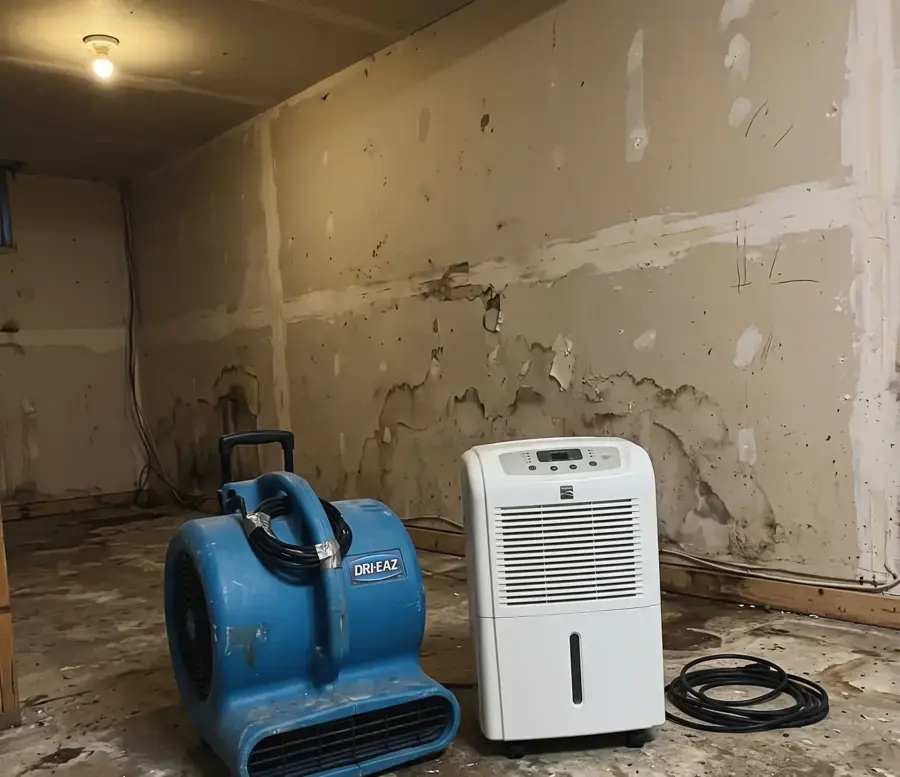
First steps for structural drying in Catoosa
- Leave the equipment on. Keep air movers and dehumidifiers running, and leave their circuit alone.
- Keep the zone closed. Keep doors to the drying zone shut and plastic sheeting up so the dehumidifiers work on one space.
- Hold the thermostat. Leave the thermostat set where the crew left it, since a steady, warm room helps materials release moisture.
- Report new damp spots. Call if a stain appears, a floor cups or a musty smell shows up so extra readings can be taken.
Pumping out the water is only half of a water loss. The framing, subfloor and wall bottoms keep holding moisture, and structural drying is the controlled process that pulls it out until the readings match dry reference points.
What does structural drying cost in Catoosa, OK?
A single room runs $700 to $1,800, several rooms $1,800 to $4,500, and a whole floor or Class 4 job $4,500 to $10,000.
A single room
- Air movers and one dehumidifier
- Readings every visit
- Dry down logged
Several rooms
- Zones sealed off
- LGR dehumidifiers
- Temperature and humidity logs
Whole floor or Class 4
- Desiccant drying
- Hardwood or slab focus
- Longer monitoring
Ranges are typical, not a quote: the water category, the square footage, the material class and how fast drying started move the number most. The water damage cost calculator gives a closer range.
How structural drying is handled in Catoosa
Measure first
Meters and a psychrometer record the starting moisture, temperature and humidity in every affected room.
Contain and plan
Plastic sheeting separates wet zones from dry ones, and equipment is sized to the volume and materials.
Run and adjust
Units go in by the moisture map, and a technician moves or adds equipment as readings change.
Confirm dry standard
Final readings must match dry reference points in each material, then the equipment comes out and the logs are compiled.
Why local buildings dry differently
The American Community Survey estimates 59 homes dating to 1939 or earlier against 1,045 built in 2000 or later, with a median year built of 1986. The May 1984 flood also put water into some 56 homes in Catoosa.
Older framing and finishes, newer drywall and engineered flooring all release water at different rates, so the equipment plan follows the materials rather than the calendar.
Wet framing or floors in a building after the water is out? Describe the rooms so the right equipment is planned.
☎ Call (888) 619-9509Call about wet floors and wallsHow the equipment works together
- Air movers keep dry air moving across wet surfaces so moisture can leave.
- LGR dehumidifiers condense the water vapor and keep the room air dry.
- Desiccant units take over for cool spaces, slabs and hardwood.
- Containment sheeting keeps the drying focused on the wet zone.
A technician returns to log room temperature, humidity and moisture content on every visit, and equipment is moved or removed as each zone reaches dry standard.
Pumped floors start drying sooner, so water extraction comes first, and concrete floors have their own plan under slab leak water damage.
Leave the equipment running
Turning equipment off early lets wet materials rebound, so the units stay on until the readings say dry, even when the room feels fine.
Structural Drying across Catoosa and nearby towns
Crews cover Catoosa and the surrounding towns around the clock for structural drying.
Structural drying runs across both the Rogers County and Wagoner County sides of Catoosa, in houses, rentals, apartments and manufactured homes, and in shops and offices near Route 66 and Interstate 44.
The same service nearby: structural drying in Owasso, Tulsa, Claremore.
Water damage restoration in Catoosa ›Related water damage services in Catoosa
Structural Drying questions in Catoosa, OK
Why keep equipment running after the floor feels dry?
Surface dryness is misleading. Framing, subfloors and wall bottoms can still hold moisture, and readings tell when each material has actually reached dry standard.
What is the difference between LGR and desiccant dehumidifiers?
LGR units condense vapor into water and suit warm, humid rooms. Desiccant units use a drying wheel and work better in cool spaces, on slabs and when hardwood needs a very low humidity.
Does structural drying change the electric bill?
Yes. Several dehumidifiers and air movers run around the clock, so electricity use rises while the drying is under way.
Can hardwood floors be dried instead of replaced?
Sometimes. Floor drying mats and desiccant equipment can pull water from boards that have only started to cup, but boards that are fully cupped or crowned often have to be replaced.
What are drying classes?
Classes describe how much water the materials absorbed and how fast it will leave, from a small area of low porosity surfaces up to Class 4, which covers deep, dense materials like hardwood and concrete.
How is a flooded home different to dry?
Flood water reaches farther into materials and carries silt, so more drywall and insulation come out first. The drying phase then follows flood damage cleanup work, and it is the same readings driven process.
Dry to the readings, not to the touch
Materials that only feel dry can still hold water, so the equipment stays until logged readings match dry reference points.
(888) 619-9509Reach the structural drying crew